A life built from steel and quiet resolve
The story of Devi Sahai Jindal — a founder, a father, and a Padma Shri — told across the eras that shaped him.
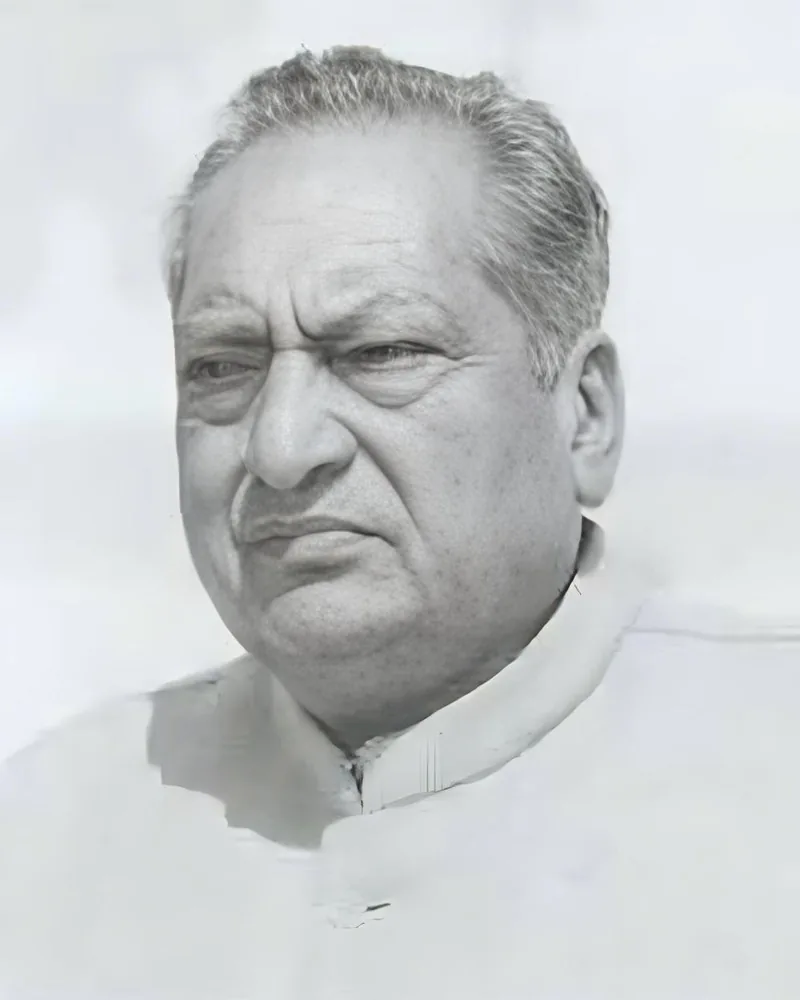
Early life in Nalwa
Devi Sahai Jindal was born in the village of Nalwa in the Hisar district of Haryana, to Netramji and Chandrawali Devi Jindal. The Haryana of his childhood was agrarian and unhurried, and the ambitions that would eventually reshape a family's fortunes began quietly, in a household where hard work was ordinary.
The household at Nalwa
The 1952 Howrah venture with Bhavi Chand Jindal
In 1952, together with his brother Bhavi Chand Jindal, Devi Sahai took the first decisive step of his industrial life — establishing a manufacturing setup in Howrah for Mild Steel, ERW, and Black Galvanised steel pipes and tubes. It was a modest beginning for what would grow into one of India's most recognised steel industrial groups.
The choice of Howrah was pragmatic. India's post-independence economy was hungry for infrastructure, and pipes and tubes were the plumbing of a nation being built. In that first factory the brothers laid down the operating philosophy that would define the Jindal name — patient capital, honest craftsmanship, and long relationships with workers and customers alike.
Why pipes and tubes
National expansion through the 1960s
Through the following decade the steel business scaled beyond Howrah, laying the foundation for what would become one of India's leading industrial families.
The Padma Shri, 1971
On 26 January 1971, the Government of India conferred upon Devi Sahai Jindal the Padma Shri — the fourth-highest civilian honour in the country — for his contribution to Trade & Industry. It placed him among a small circle of first-generation industrialists who had helped stitch India's manufacturing base together in the two decades after independence.
What the honour recognised
The later division of the group
Devi Sahai was married to Ram Dei Devi, and together they raised the next generation that would carry the family's work forward. Over the years the founding enterprise evolved, and today its legacy is carried by several allied groups — the DSJ Group, the BCJ Group, the OPJ Group, and the DPJ Group — each stewarding a branch of the family's industrial tradition.
The branch-by-branch picture is set out on the family tree page.
A quiet inheritance
To read about Devi Sahai Jindal only through the ledger of his companies would be to miss the point. What he left behind is not just a set of factories, but a manner of working: to build slowly, to keep faith with the people who work alongside you, and to treat industry as a form of civic service. That inheritance is why this site exists — so that a grandfather's story is not left only to Wikipedia's brief paragraphs, but is kept in the family's own voice.
Sources: Wikipedia and jindal.co.in. Family recollections may be added over time.